Petite vs Regular Sizing: Why Clothes Can Fit & Still Look Wrong
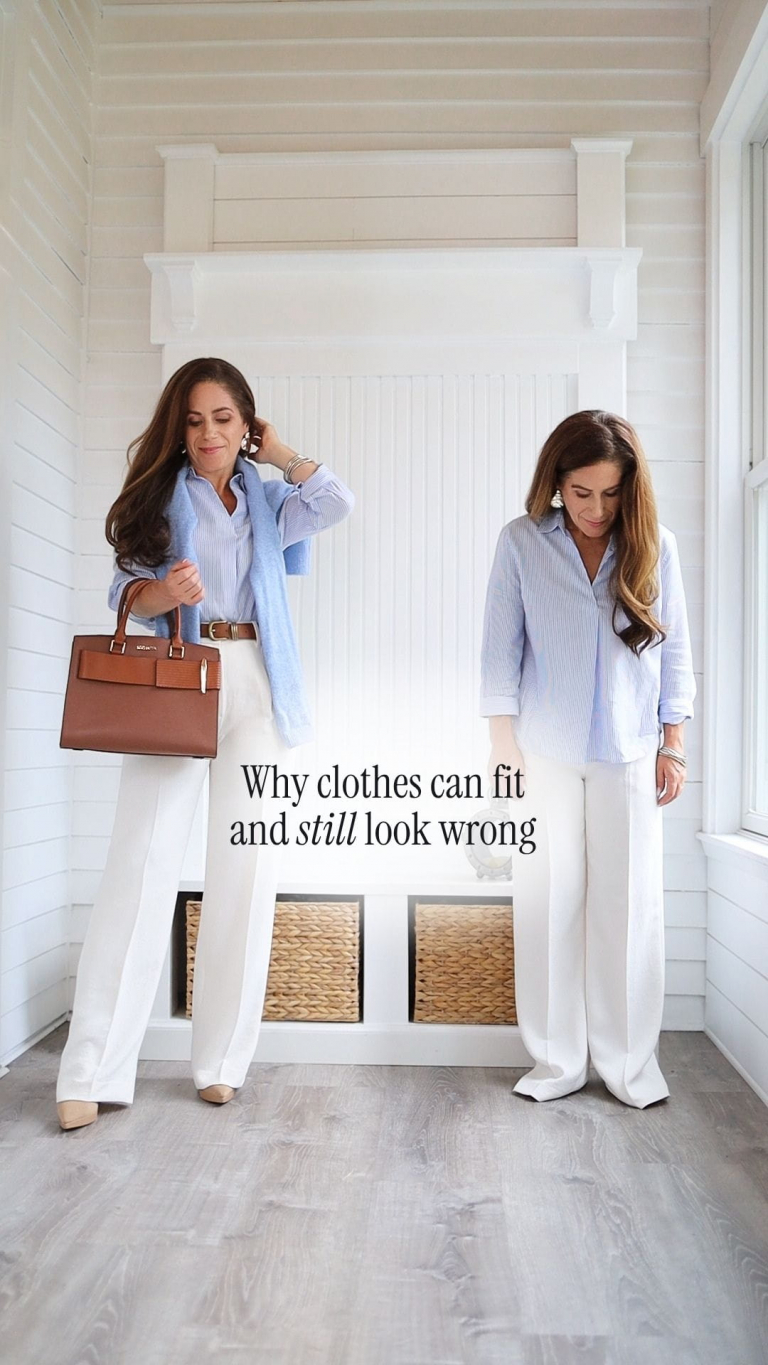
I spent years—YEARS—buying clothes that “technically” fit. They were my size, but something always felt off. The sleeves were too long, the waist hit oddly, something looked funky at the shoulder. Pants that fit my waist, felt painted on my thighs. It felt like I was at war with fitting room mirror. Why was it so effortless on the model, but awkward on me?
Turns out, I wasn’t the problem at all. My thinking was. I had been ignoring the most crucial part of the style equation—proportion. That’s the real difference between petite and regular sizing. And it completely changed the way I shop.
Petite sizing isn’t just about making clothes shorter. It’s about changing the proportions of the entire garment to better fit a smaller frame. Understanding it has saved me from a lot of expensive shopping mistakes. Prefer to see these fit differences in action? I break down the petite proportions I look for—and why they matter—in the video below.
After years of buying, trying, returning, tailoring, and experiment with clothes (plus more than a decade working in television, where I became acutely aware of how clothing translates visually), I’ve learned to shop for proportion before size.
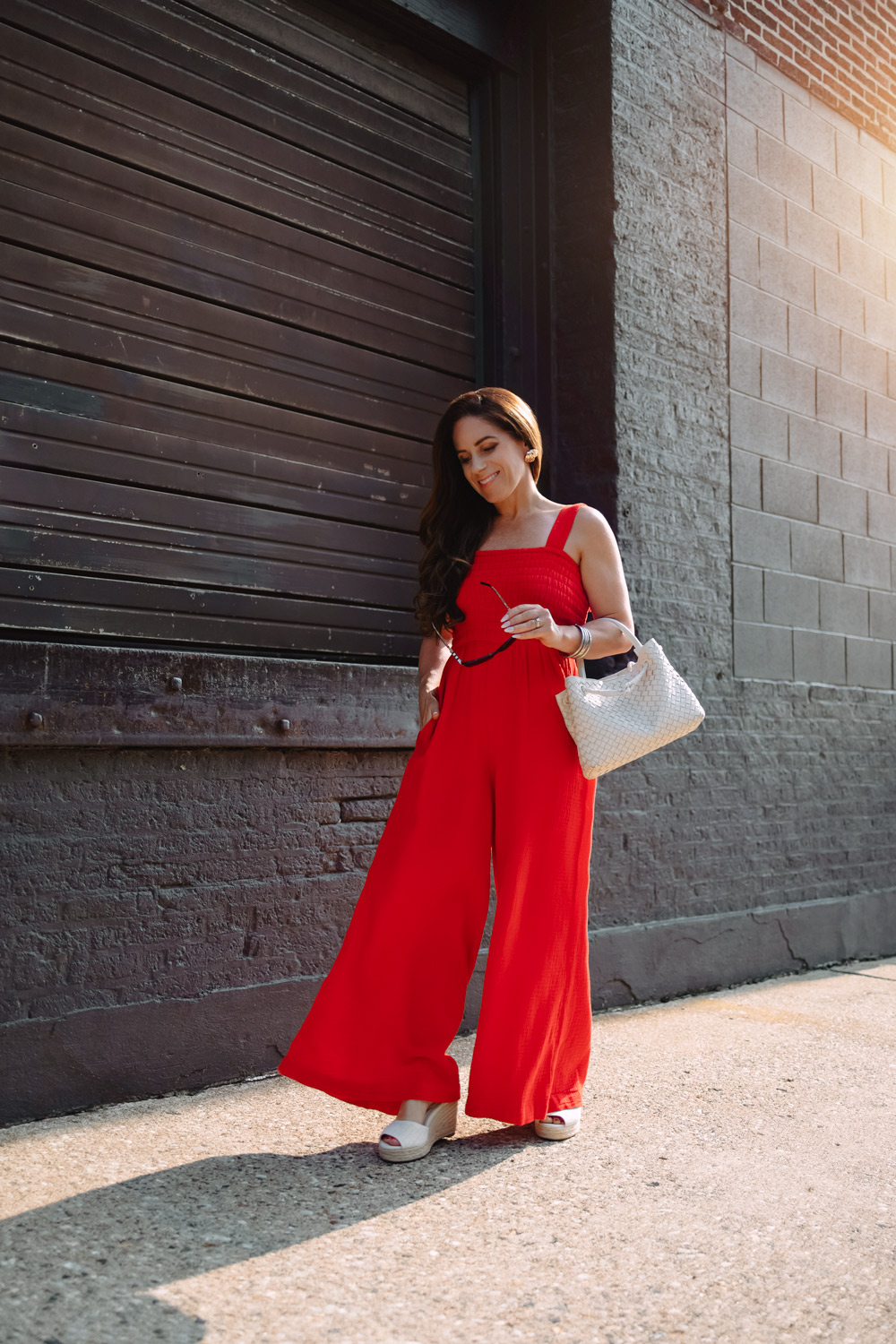 Wide Leg Jumpsuit (XS petite)
Here’s what that actually means…
What is the Difference Between Petite and Regular Sizing?
Let’s clear up one of the biggest misconceptions about petite clothing first:
Petite does not necessarily mean smaller.
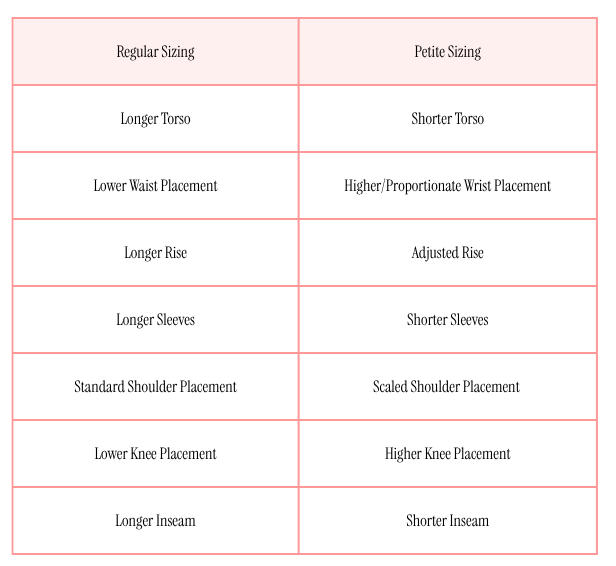
Yes, let me say it again for those wanting clarification about petite vs regular sizing. Petite clothing is generally designed for women 5’4″ and under, with multiple parts of the garment adjusted to accommodate shorter proportions.
Depending on the garment and brand, that can include:
And this is exactly why simply buying an XS—or sizing down—never solved my fit problems.
Sizing down makes a garment smaller. Petite sizing changes where the garment is supposed to fit your body.
I might be petite, but I’m not tiny. That’s an important distinction.
For example, I used to think my frame was simply not meant for white denim. I loved how chic white jeans looked on my friends in the summer time, but every time I tried on a pair that fit my waist it felt like I was squeezing my thighs into a sausage casing. And don’t even get me started on the pocket placement and the rise!
Then I discovered the root of my problem…
Instead of turning to true petite sizing, I was making due with the meager options I could find in stores.
My body wasn’t the issue, it was the sizing. Once I slipped on a pair of Madewell’s aptly named Petite Perfect Vintage Wide Leg Jeans, my distaste for white denim evaporated. I almost couldn’t believe what I saw in the mirror. They weren’t just acceptable, they were flattering. And have since become my most-worn summer pants.
In contrast, regular size denim throws off my proportions. Subtle adjustments to rise, inseam, and pocket placement make more of a difference than you might image.
Would be delightful if we petites could shop “off-the-rack” and in-store like other women? Absolutely. But, the proportional fit you can find buying petite offerings online is 100% worth the hassle. This is especially true if you are what we’d classify as “extra petite.” This designation generally refers to women who are 5’1 or 5’0 and under. At 4’11, this is the category I fall into.
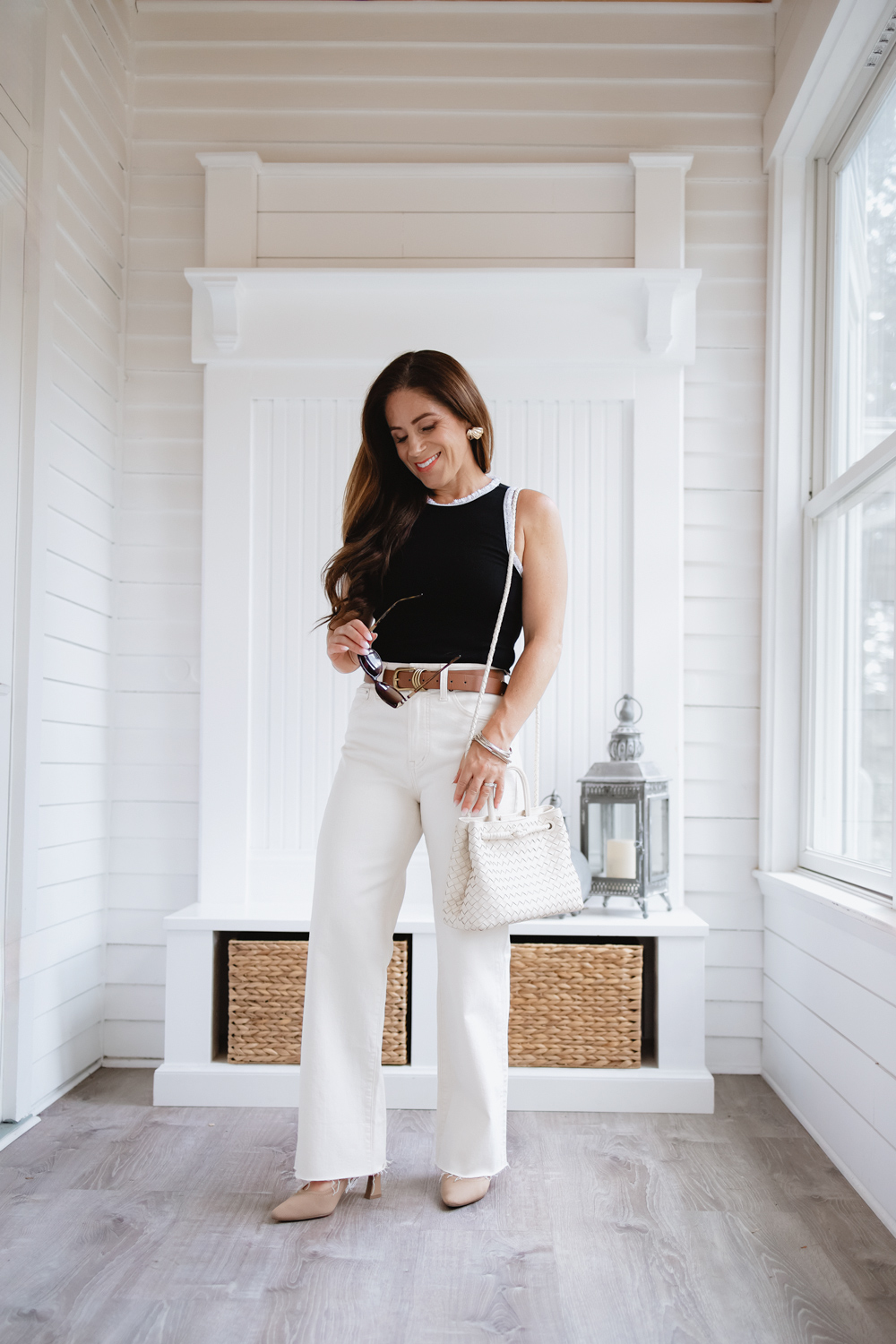 Wide Leg Jeans (Madewell) | Tank | Heels | Bag
Your Clothes Can Be the Right Size & Still Look Wrong
-
Shoulders
Shoulder fit is one of the hardest things to alter—and one of the quickest ways a garment can look “off.” When the shoulder seam extends past your natural shoulder, jackets, blouses and dresses can look oversized or sloppy even when they technically fit everywhere else.
-
Rise
We’re all familiar with rise when discussing denim. However, it’s an important consideration for all petite-friendly pants. You need to understand your individual frame before you can choose the more flattering rise. Rise determines where pants sit and how the proportions are distributed between your waist and crotch. On a shorter torso, a rise designed for a taller frame can come up too high, bunch through the middle or simply make the proportions of the pants feel wrong (even in your usual size).
-
Wrist Placement
Details are designed with a particular body proportion in mind, too. A cuff, button, slit or sleeve detail that is supposed to land neatly at your wrist can end up several inches lower on a petite frame, subtly changing the entire look of the garment. For example, I recently bought Sezane’s Scott Trench Coat which is not offered in petite sizing. The fit was impeccable in the shoulders. I loved the length. It was practically perfect… but the gorgeous cuff detailing? I’ll need to fold it under, cut it off, or find an expert tailor to move it for me.
-
Sleeves
Sleeves aren’t just about whether they’re too long. The elbow, taper and widest parts of the sleeve are all designed to correspond with certain points on your arm, so shortening the cuff doesn’t always recreate the proportions of a true petite garment.
-
Pocket placement
Pocket placement is an overlooked reason pants and jeans can look surprisingly different from one size or cut to another. Back pockets that sit too low or are scaled too large for your frame can visually change the proportions of your seat and legs, while correctly positioned pockets tend to look more balanced.
-
Print/detail Scale
Proportion applies to the decorative elements of clothing, too. Large prints, oversized buttons, wide lapels, dramatic collars or other details can take up more visual space on a smaller frame—not because petites can’t wear them, but because their scale becomes a much bigger part of the overall outfit. This bra-free midi dress (available in petite sizing) from Abercrombie is a great example of a floral print that’s properly scaled for petites.
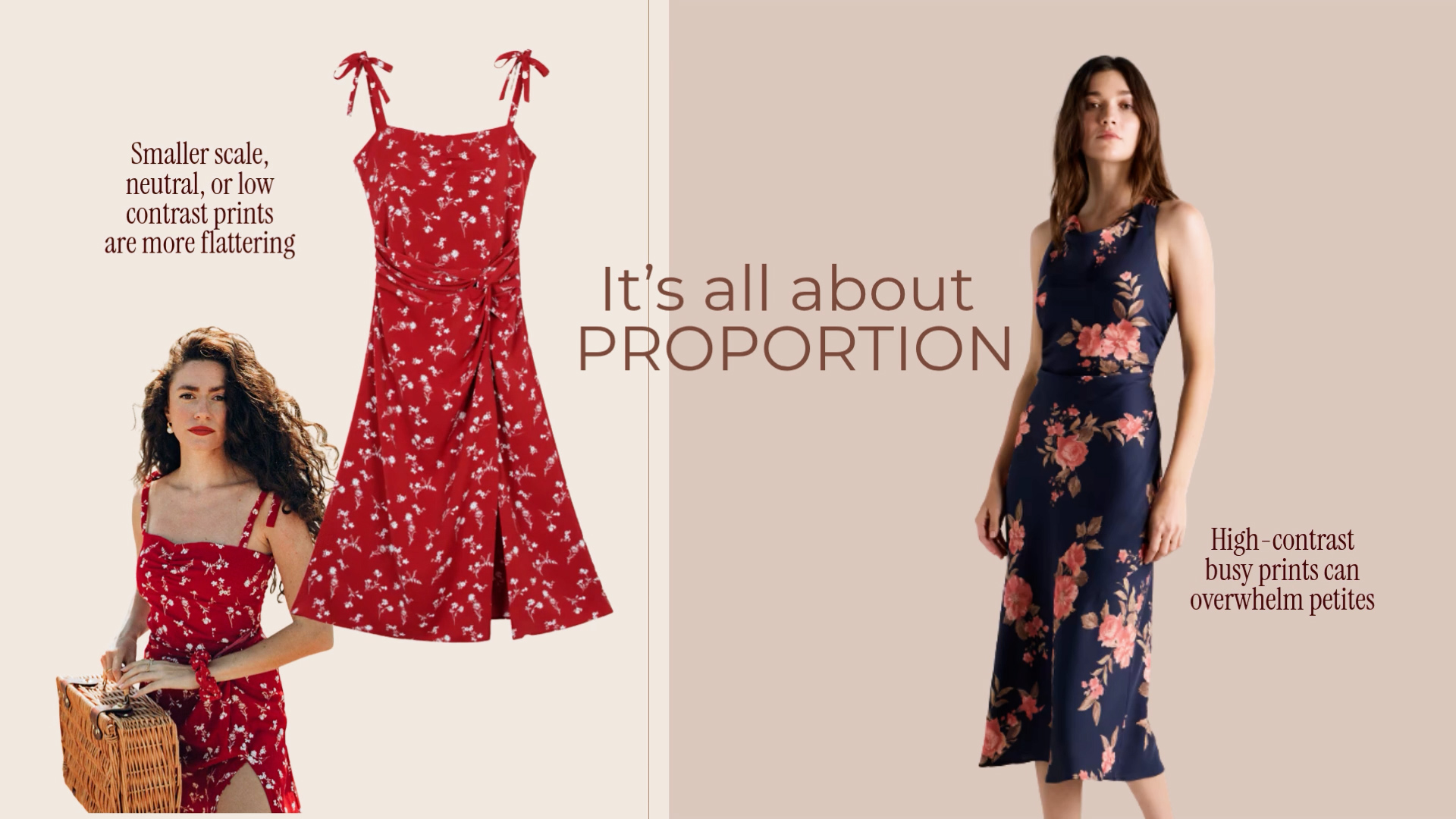 Red Floral Dress (Petite Studio NYC) | Blue Silk Floral Dress (Quince)
Can I Just Tailor Regular Clothes Instead?
Sometimes—but hemming isn’t the same as petite construction.
You can alter:
- hem
- sleeves
- modest waist adjustments
Much harder:
- shoulder placement
- armhole depth
- rise
- torso length
- pocket placement
- overall jacket proportions
Ultimately, tailoring is the finishing touch. It is not a substitute for buying something designed with your proportions in mind. Petites want to be searching for garments that work immediately. Save alterations for simple adjustments, such as taking up the hem of a pant.
For instance, my favorite wide-leg trouser is the Effortless Pant from Aritzia in its Crepette fabric. I ordered it in the “short” length. That gives me an inseam of 27.25″, meaning I could wear them with my tallest heels right away. Should I choose to style these with a more moderate kitten heel or flats, the alteration is simple.
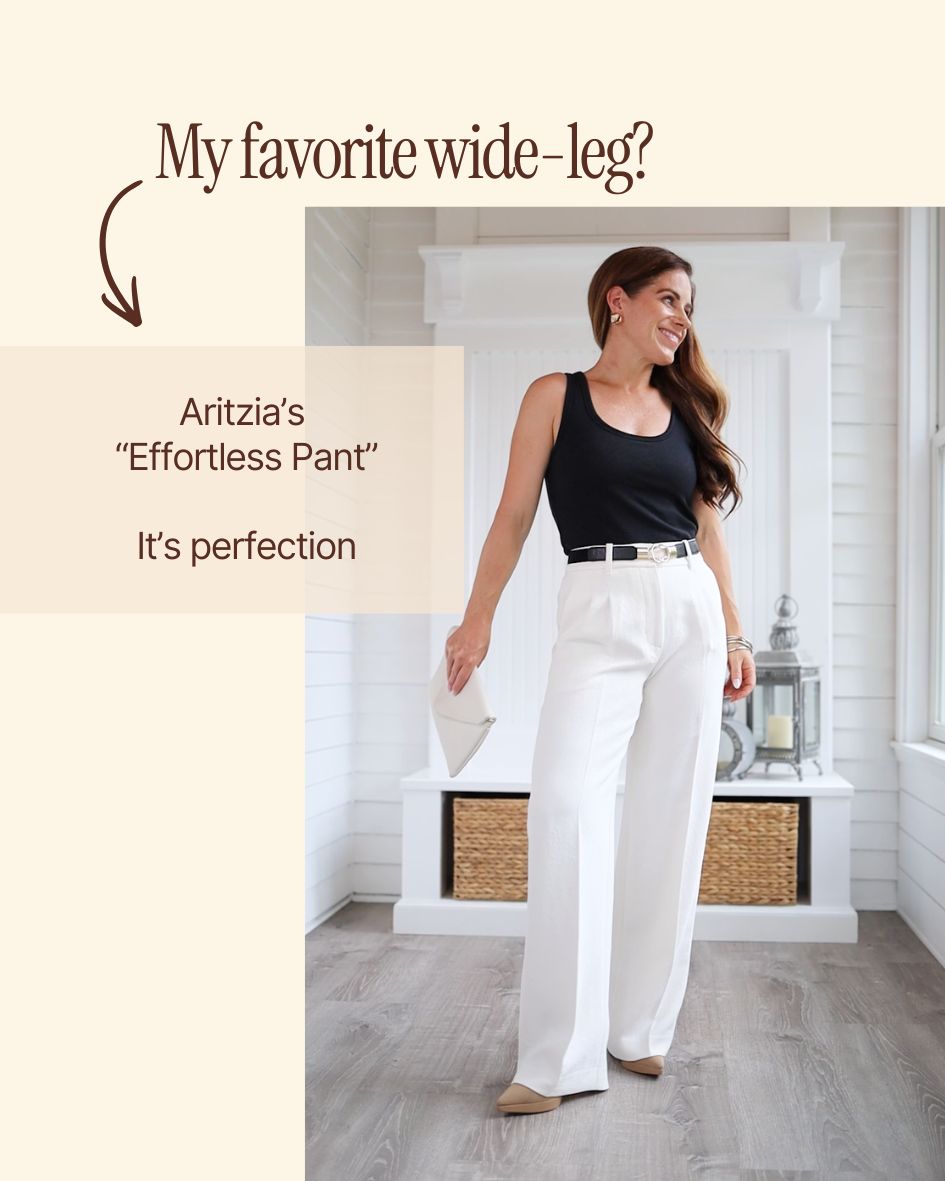 Effortless Pant (Aritzia – light birch colorway) | Bra-Free Tank (Abercrombie)
Do I Need Petite Sizing?
It’s definitely worth trying. However, it’s not a requirement for every garment. You need to consider your individual proportions. Remember, petites are not “one-size-fits all.” A petite label on clothing refers to height and scale. It does not take into account how petite frames vary.
For example:
- A 5’2″ woman with relatively long legs might buy regular trousers but petite jackets.
- A 5’4″ woman with a short torso might prefer petite tops.
- And me? Personally, at 4’11, I find true petite construction useful where smaller proportions need to align simultaneously.
These include garments like petite jumpsuits, maxi dresses, and maxi skirts. The red wide-leg style I showed above from Quince (you can shop it here) is a good example. Typically, I wouldn’t even try a jumpsuit or maxi dress without the opportunity to slip it on for sizing checks in-store. The differences between petite vs regular sizing are significant and open up a new realm of possibility for those under 5’4.
In fact, I think there is significant momentum behind the rollout of more petite sizing options. If you look closely, you’ll notice brands like Abercrombie including petite length options on its dress and jumpsuit collection. Quince is another example. It now dedicates a specific tab to all of its petite-friendly styles. There are quite a few gems, including its Ultra Stretch Ponte Pant (available in extra short), Bella Stretch Wide Leg Jeans (available in short), and Organic Cotton Poplin Tiered Maxi Dress.
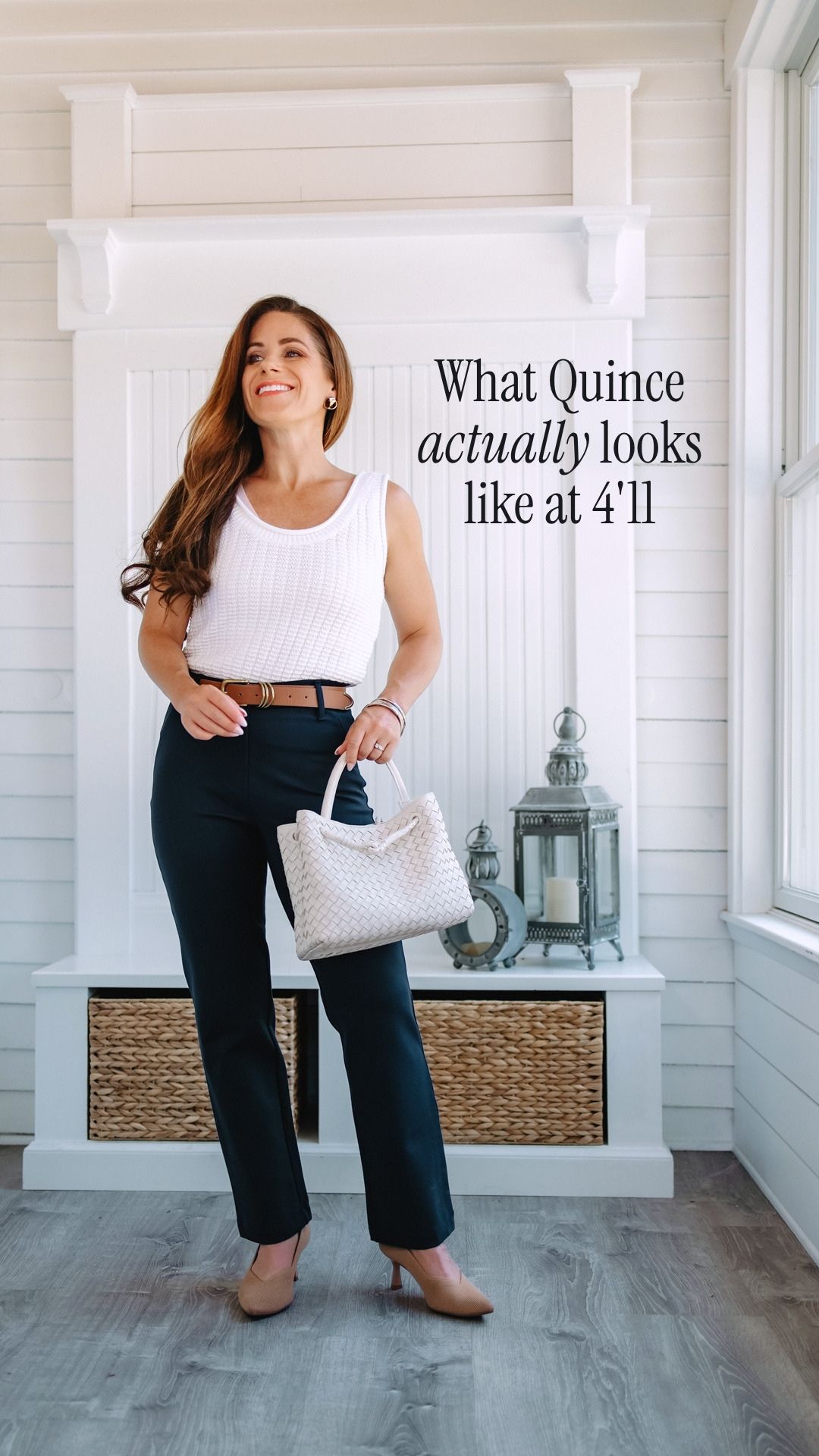 Ultra Stretch Ponte Pant | Cropped Sweater Tank | Heels
Where Petite Sizing Makes the Biggest Difference
When thinking critically about petite vs regular sizing, we also have to consider budget. I believe shorter women should invest in garments where petite sizing matters most. These include:
- Blazers and coats – These involve shoulder placement, sleeve length, waist placement and overall scale simultaneously.
- Tailored Trousers – These require rise, knee placement, inseam, and pocket placement accuracy.
- Dresses – We’re dealing with waist placement, torso length, and hemline here.
- Jumpsuits – Safe to say this is the ultimate petite-fit test because both the upper and lower halves need to align with your body at the same time.
After years of assuming clothes looked wrong because something was wrong with my body, I’ve learned to ask a completely different question in the fitting room:
Is this the wrong size—or is it simply designed for different proportions?
Sometimes the answer is petite sizing. Sometimes it’s a regular garment that happens to hit me perfectly. And sometimes it’s a piece worth tailoring. The important thing is knowing the difference.
Being petite doesn’t mean following a separate set of fashion rules. It means understanding your proportions well enough to recognize when a garment is working with them—and when it isn’t.
Shop for proportion first. Size second.
Just getting started on your petite-friendly closet? You may find my round up of the 10 Best Brands for Petite Women helpful.
Related Posts

Baltic Born Dress Review: Size-Inclusive & Versatile
When you’ve spent over a decade dressing for high-definition cameras and the unforgiving…
August 6, 2025
Timeless Elegance: How to Style a Summer Dress
It’s all about the finishing touches, right? I’ve always loved dresses…
May 15, 2025
Leave A Comment